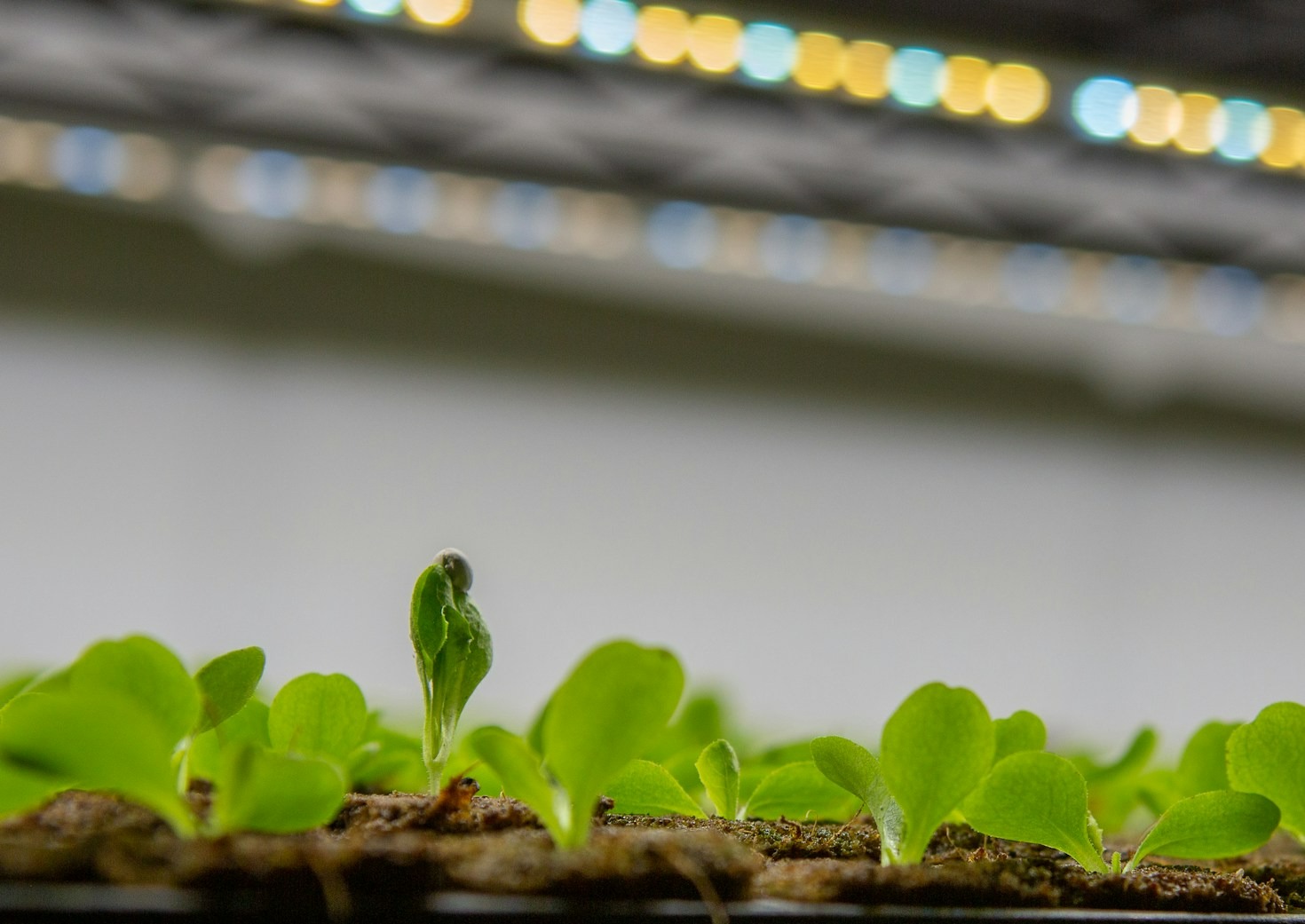
If you’re still running your panels on “full-blast purple” for everything, you’re leaving flavor, yield and electricity dollars on the table. Different plants evolved under different latitudes, canopy densities and day-lengths—so they need different light recipes. Below you’ll find quick-reference PPFD numbers, color ratios and photoperiods for the six crop groups we get asked about most, plus the why behind each number so you can adjust even if you switch brands or build DIY strips.


1. Herbs & Microgreens (basil, cilantro, dill, arugula) Ideal PPFD: 150–250 µmol/m²/s
Spectrum: 60 % red (620–660 nm), 30 % blue (430–450 nm), 10 % green (500–580 nm)
Photoperiod: 14–18 h on (no dark period needed for most herbs)
Pro tip: Green photons drive leaf penetration; skipping them gives you spindly microgreens that topple over.
2. Leafy Lettuces & Asian Greens PPFD: 180–220 µmol/m²/s
Spectrum: 55 % red, 35 % blue, 10 % far-red (730 nm)
Far-red speeds up leaf expansion, shortening crop cycle by 1–2 days. Keep DLI (Daily Light Integral) under 17 mol/m²/day to avoid bitter nitrate spikes.
3. Fruiting Crops (tomato, pepper, cucumber) Seedling stage: 200–300 µmol/m²/s
Vegetative: 400–500 µmol/m²/s
Flowering/fruiting: 600–900 µmol/m²/s (CO₂ supplementation lets you push 1000+)
Spectrum: 70 % red, 20 % blue, 10 % white + 660 nm red boost chip.
Photoperiod: 16–18 h veg, 12 h bloom.
Use separate bloom bars with extra 660 nm and 730 nm to raise PFR/PR ratio; you’ll see 8–12 % yield bumps in side-by-side tests.
4. Orchids & Flowering Houseplants (phalaenopsis, anthurium) PPFD: 100–150 µmol/m²/s (they burn above 200)
Spectrum: 50 % red, 30 % blue, 20 % warm white 3000 K for aesthetic viewing.
Photoperiod: 12–14 h; give them 4 weeks of 11 h nights to trigger spikes.
5. Cannabis (legal jurisdictions only) Clone: 100–150 µmol/m²/s
Veg: 400–600 µmol/m²/s
Flower: 800–1200 µmol/m²/s (with 1.2 % CO₂)
Spectrum: Full-spectrum 3500 K board plus 660 nm and UV-A (385 nm) bars last 3 weeks. UV boosts THC & terpenes 3–5 %.
Photoperiod: 18/6 veg, 12/12 flower.
Hang lights 30–45 cm above canopy; use PPFD meter, not your eyes—cannabis can look fine at 1500 µmol while cells photobleed.
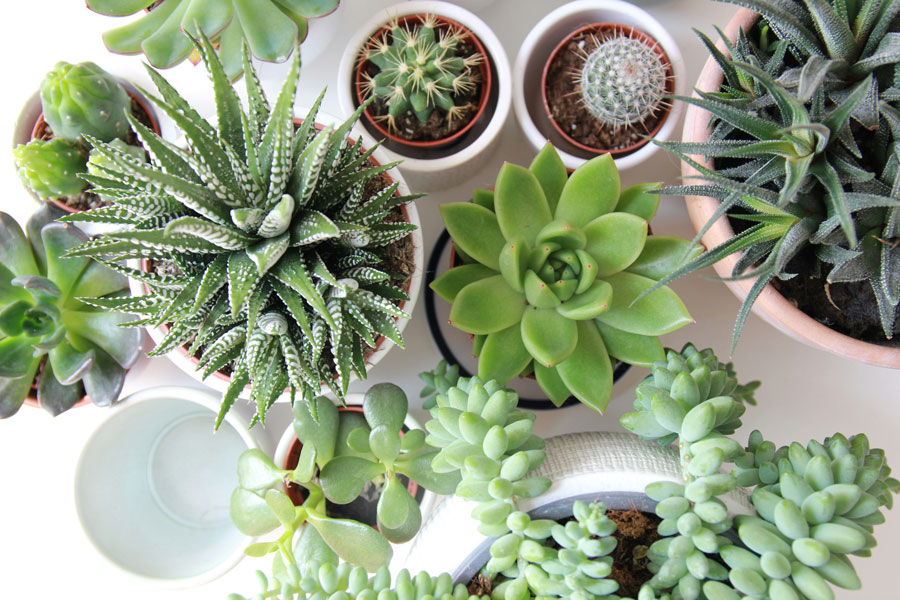
6. Succulents & Cacti PPFD: 200–400 µmol/m²/s
Spectrum: 40 % blue, 40 % red, 20 % white 5000 K for compact growth.
Photoperiod: 12–14 h; give them 8 h nights in winter to encourage flowering.
Too much far-red = etiolated, stretched ghost plants.
DIY Checklist Before You Hit “Buy”
- Download the spectral graph from the manufacturer—if blue < 15 % or green > 30 %, skip it for fruiting crops.
- Multiply PPFD × 3.6 × hours on = DLI. Match DLI targets, not just PPFD.
- Use a $30 PAR meter; phone apps are ±20 % off and will burn your plants.
- Hang adjustable ratchets—every 2 °C rise above 28 °C cuts pepper fruit set 10 %.
- Group plants by light need, not pot size; herbs on the top shelf, succulents middle, cannabis floor if vertical farming.
Common Mistakes That Waste Watts
- Running 24 h light “to speed things up.” Most C3 plants need a dark period for starch remobilization; 24 h light can stunt growth 15 %.
- Ignoring leaf temperature. Infrared guns read 3–4 °C cooler than actual leaf surface; use a fine-wire thermocouple.
- Using bloom switches too early. Flip only when nodes stack <1 cm apart; pre-flowering under veg spectrum won’t hurt yield.
Quick Reference Chart (save it to your phone)
Crop Group Seedling Veg Flower DLI max Night Temp Herbs 150 200 – 12 18 °C Lettuce 150 200 – 17 16 °C Tomato 250 450 800 25 18 °C Orchid 80 120 – 8 15 °C Cannabis 120 500 1000 40 20 °C Succulent 150 300 – 15 12 °C
Final Takeaway Light is a nutrient—too little starves your plants, too much burns your wallet. Match PPFD, spectrum and photoperiod to each crop stage, measure don’t guess, and you’ll harvest 20–30 % more without adding a single watt.
Ready to upgrade? Check our spectrum-tunable LED bars with on-board PPFD sensors, or drop your grow room specs in the comments and we’ll map out a free light plan in 24 h.
Leave a Reply